Blog

  • How to Increase Your Credit Card Limit Fast

    How to Increase Your Credit Card Limit Fast

    Boosting your credit limit is a strategic move that can significantly improve your financial flexibility and, surprisingly, your credit score. When you have a higher limit but keep your spending the same, your credit utilization ratio drops, which is a major win in the eyes of lenders. However, getting that “yes” from your bank isn’t always about luck. It’s about presenting a profile that suggests you are both responsible and capable of handling more credit. Whether you’re planning a major purchase or simply want to strengthen your financial standing, understanding the levers you can pull—from updating your income to timing your requests—is essential. This guide breaks down exactly how the process works and how you can position yourself for a fast approval.


    What is a Credit Card Limit Increase and Why it Matters

    A credit card limit increase is an adjustment by your card issuer that allows you to borrow more money on a single account. While it might seem like an invitation to spend more, the real value lies in Credit Utilization. This is the percentage of your total available credit that you’re currently using. For instance, if you have a $1,000 limit and a $500 balance, your utilization is 50%. If your limit increases to $2,000, that same $500 balance suddenly represents only 25% utilization.

    Maintaining a utilization rate below 30% is a gold standard for a healthy credit score. Beyond the score benefits, a higher limit provides a safety net for emergencies and allows you to earn more rewards or cashback on larger, necessary expenses. It signifies that your lender trusts your financial management, which can make it easier to secure favorable rates on future loans or mortgages.


    Step-by-Step Guide to Increasing Your Limit

    Follow these steps to maximize your chances of a successful request:

    • Update Your Income Information: Log into your online banking portal. Most issuers have a section for “Income and Employment.” Ensure your annual income is up to date, including bonuses or side-hustle earnings, as this is often the primary metric used for automated increases.

    • Wait for the Six-Month Mark: Most lenders won’t consider an increase for accounts less than six months old. If you’ve been a consistent, on-time payer for half a year, your chances of approval skyrocket.

    • Request via the Mobile App: Many banks have a “Request a Credit Limit Increase” button. This often triggers a “soft pull” on your credit, which doesn’t hurt your score.

    • Call the Reconsideration Line: If the automated system denies you, call a representative. Be prepared to explain why you want the increase (e.g., “I’m planning to use this card for all my monthly expenses to earn rewards”) and highlight your loyalty as a customer.

    • Pay Your Balance in Full Early: For two months before your request, pay off your balance before the statement closing date. This shows the lender that you aren’t reliant on the credit you already have.

    • Monitor Your Credit Score: Ensure your score is in an upward trend. Lenders are hesitant to extend more credit if they see new late payments on other accounts.


    The Math Behind Credit Utilization

    The most important formula in the world of credit limits is the Credit Utilization Ratio. This formula is used by FICO and VantageScore to determine 30% of your total credit score.

    $$Utilization = \left( \frac{\text{Total Credit Card Balances}}{\text{Total Credit Limits}} \right) \times 100$$

    For example, if you have two cards:

    1. Card A: $2,000 limit, $400 balance

    2. Card B: $3,000 limit, $600 balance

    Your total limit is $5,000 and your total balance is $1,000.

    $$\left( \frac{1,000}{5,000} \right) \times 100 = 20\%$$

    When you increase your limit (the denominator), the resulting percentage decreases even if your spending remains the same. A lower percentage tells the credit bureau’s algorithm that you are at low risk of overextending yourself financially.


    Real-Life Scenarios

    Scenario 1: The Strategic Traveler

    Sarah has a credit card with a $3,000 limit. She spends $1,500 a month on travel and dining to earn points. Her utilization is 50%, which is dragging her score down. She requests and receives an increase to $6,000. Now, her $1,500 monthly spend only accounts for 25% utilization. Within two months, her credit score jumps by 25 points because she moved into the “low utilization” category.

    Scenario 2: The Income Update

    Mark started a new job with a 20% salary increase. He updates his profile on his bank’s website. Three days later, he receives an automated email stating his limit was increased from $5,000 to $8,000 without him even asking. The bank’s internal algorithm flagged his higher “Ability to Pay” and adjusted his limit to match his new financial status.


    FAQs

    1. Does requesting a limit increase hurt my credit score?

    It depends on the bank. Some perform a “soft pull,” which has no impact. Others do a “hard pull,” which might drop your score by a few points temporarily. Always ask the representative or check the app’s fine print before submitting.

    2. How much of an increase should I ask for?

    A safe and common request is 10% to 25% of your current limit. Asking for a 100% increase (doubling your limit) is possible but usually requires a significant change in income or a very long history of perfect payments.

    3. What if my request is denied?

    Don’t panic. The bank is required to send you an “Adverse Action Notice” explaining why. Common reasons include “too many recent inquiries” or “low usage of current limit.” Address the specific reason and try again in 3 to 6 months.


    Conclusion

    Increasing your credit card limit is a powerful tool for financial growth when used responsibly. By focusing on your utilization ratio and keeping your income data current, you can unlock higher limits that support your lifestyle and your credit health.
  • Minimum Salary for HDFC Credit Cards

    Minimum Salary for HDFC Credit Cards

    Navigating credit card eligibility can feel like a maze, especially with a major lender like HDFC Bank. If you’ve ever wondered why some people get approved instantly while others face rejection, the answer often lies in the “income floor.” HDFC offers a wide spectrum of cards, from entry-level shopping cards to ultra-premium travel companions, each with its own minimum salary gatekeeper.

    Understanding these requirements before you apply is the best way to protect your credit score from unnecessary hard inquiries. In this guide, we break down exactly how much you need to earn to qualify for India’s most popular HDFC credit cards in 2026.


    What is HDFC Income Eligibility and Why it Matters

    Income eligibility is the minimum monthly salary (for salaried individuals) or annual ITR (for the self-employed) required to qualify for a specific credit card. For HDFC Bank, this is a non-negotiable metric used to assess your “repayment capacity.”

    It matters because HDFC uses your income to determine two things: approval and credit limit. If you apply for a premium card like the Regalia but earn an entry-level salary, your application will likely be rejected, leaving a negative mark on your credit report. Conversely, choosing a card that matches your income ensures a smoother approval process and a credit limit that helps you manage your lifestyle without falling into a debt trap.


    Step-by-Step Guide: Checking Your Salary Eligibility

    Before hitting that “Apply Now” button, follow these steps to see where you stand:

    • Calculate Your Net Monthly Income: Banks look at your “in-hand” salary (after PF and tax deductions), not just your CTC.

    • Identify Your Category: * Entry-Level: Earning ₹10,000 to ₹25,000 per month.

      • Mid-Range: Earning ₹35,000 to ₹70,000 per month.

      • Premium: Earning ₹1 Lakh+ per month.

    • Match Your Salary to the Card: * ₹10,000 – ₹20,000: Look at the HDFC IndianOil or Freedom Card.

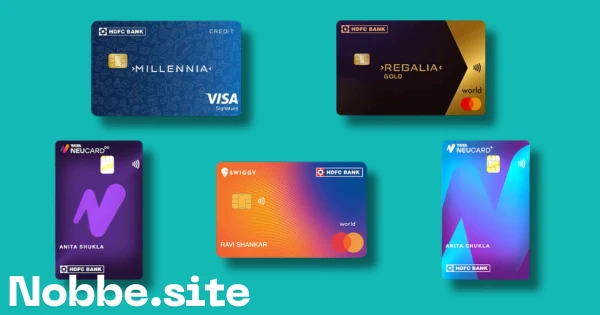
      • ₹25,000 – ₹35,000: Look at HDFC MoneyBack+ or Millennia.

      • ₹1,00,000+: Aim for HDFC Regalia Gold.

    • Self-Employed? Check Your ITR: For business owners, HDFC usually requires a minimum annual ITR of ₹6 Lakhs for basic cards, scaling up to ₹21 Lakhs for elite variants.

    • Use the HDFC Portal: Log in to HDFC NetBanking. Often, the bank displays “Pre-approved” offers tailored specifically to your existing salary account.

    • Verify Documentation: Ensure you have the last 3 months of salary slips and your latest Form 16 ready to prove your income.


    The Math Behind It: The Debt-to-Income (DTI) Ratio

    When HDFC reviews your salary, they aren’t just looking at the total number; they are calculating your Debt-to-Income (DTI) Ratio. This is the percentage of your gross monthly income that goes toward paying debts (like home loans, car loans, or other credit cards).

    The formula is simple:

    $$\text{DTI Ratio} = \left( \frac{\text{Total Monthly Debt Payments}}{\text{Gross Monthly Income}} \right) \times 100$$

    Generally, banks prefer a DTI ratio below 40%. Even if you earn a high salary of ₹1.5 Lakh per month, if ₹1 Lakh goes into existing EMIs, your “effective” income for a new credit card is low. This is why some high-earners still face rejection.


    Real-Life Scenarios: Salary vs. Approval

    How does this look in practice? Here are three common examples:

    • The Fresh Graduate: Aastha earns ₹22,000 per month at her first job. She applies for the HDFC MoneyBack+ Card. Since the requirement is roughly ₹20,000–₹25,000, she is likely to get approved with a modest credit limit of around ₹30,000–₹50,000.

    • The Mid-Career Professional: Rahul earns ₹85,000 per month. He wants a travel card and applies for the HDFC Regalia Gold. Since his income comfortably exceeds the ₹1 Lakh requirement (or close to it depending on his relationship with the bank), he is approved with a limit of ₹2 Lakhs+.

    • The Business Owner: Vikram is a freelancer with an annual ITR of ₹5 Lakhs. He applies for the HDFC Millennia. Because most self-employed cards require an ITR of ₹6 Lakhs, he might be rejected unless he has a strong existing savings account balance with HDFC.


    FAQs

    1. Can I get an HDFC credit card with a ₹15,000 salary?

    Yes. Entry-level cards like the HDFC IndianOil or HDFC Freedom have lower income thresholds, often starting around ₹10,000 to ₹12,000 for salaried individuals.

    2. What if my salary is lower than the requirement?

    You can apply for a Secured Credit Card against a Fixed Deposit (FD). HDFC allows you to get a card by blocking a certain amount in an FD, regardless of your monthly salary.

    3. Does HDFC consider “Other Income” like rent or dividends?

    Usually, HDFC focuses on your primary salary or business ITR. However, if you are a “Preferred” or “Imperia” banking customer, your total relationship value (TRV) can sometimes override strict salary requirements.


    Conclusion & CTA

    Knowing the minimum salary for HDFC credit cards is the first step toward financial freedom. Whether you’re starting with a basic card or aiming for the elite tiers, matching your income to the right product ensures you get the benefits you deserve without the stress of rejection.

  • How to Get a Lifetime Free Credit Card in India

    How to Get a Lifetime Free Credit Card in India

    Are you tired of paying hefty annual fees just to maintain the convenience of a credit card? You aren’t alone. Many Indians find themselves stuck with high-maintenance cards that eat into their budget through recurring “renewal” charges. Fortunately, there is a smarter way to manage your finances. A lifetime free credit card in India allows you to enjoy the perks of credit—such as reward points, cashback, and interest-free periods—without ever having to worry about an annual maintenance fee.

    Whether you are a first-time user looking to build your credit score or a seasoned shopper wanting to save on extra costs, this guide explains how to secure a card that stays free forever. We will walk you through the top options, the application process, and the strategies to ensure you never pay a dime in hidden charges.


    What is a Lifetime Free Credit Card and Why it Matters

    A lifetime free credit card is exactly what the name implies: a card that comes with zero joining fees and zero annual maintenance fees for the entire duration you hold the account. Unlike “first-year free” cards that eventually charge you upon renewal unless you meet specific high-spending targets, a truly lifetime free card requires no conditions to keep the fee waiver active.

    This matters because your credit card should be a financial tool, not a recurring liability. For many, annual fees can range from ₹500 to over ₹10,000 depending on the card tier. By choosing a lifetime free option, you save that money every single year. Furthermore, these cards are excellent for “credit hygiene.” Because there is no pressure to hit spending targets just to justify the annual fee, you can use the card sparingly—perhaps just to pay a utility bill or for occasional online shopping—without worrying about costs. They are perfect for building a positive credit history without the burden of extra fees.


    Step-by-Step Guide: How to Get Yours

    Securing a lifetime free credit card in India has become significantly easier thanks to digital-first banking and simplified KYC processes. Follow these steps to get your card:

    • Check Your Eligibility: Most banks require you to be at least 18–21 years old with a stable source of income or a decent credit score (typically 750+). If you have no credit history, look for “FD-backed” (secured) lifetime free credit cards.

    • Research Top Issuers: Look for popular lifetime free options like the IDFC FIRST Bank series, Amazon Pay ICICI Card, or RuPay-based cards (like Kiwi).

    • Prepare Your Documents: Keep your original Aadhaar card (linked to your mobile number) and PAN card ready for E-KYC.

    • Apply Online: Visit the official bank website or the specific credit card app. Fill in your details, confirm your address, and complete the video KYC process.

    • Virtual Card Activation: Many modern fintech apps (like Kiwi or OneCard) issue an instant virtual card. Once your application is approved, you can link this card to your UPI app and start making transactions immediately.

    • Physical Delivery: Your physical metal or plastic card will be dispatched to your registered address within 7–10 working days.


    The Math Behind It: Why Banks Offer These Cards

    You might wonder, if the bank doesn’t charge a fee, how do they make money? It’s a common misconception that banks lose money on these cards. In reality, they earn revenue through three primary channels:

    1. Merchant Discount Rate (MDR): Every time you swipe your card or scan a QR code at a merchant, the merchant pays a small percentage (usually 1–2%) to the bank.

    2. Interest Income: If you don’t pay your full “statement balance” by the due date, banks charge an extremely high annual percentage rate (APR), often ranging from 36% to 48%. This is where they make the most profit.

    3. Cross-Selling: Once they have you as a customer, banks promote high-margin products like personal loans, insurance, or premium savings accounts.

    By offering a lifetime free card, banks lower the barrier to entry, ensuring they capture a larger share of your daily spending. They essentially trade the “annual fee” income for a share of every transaction you make.


    Real-Life Scenarios: When to Use Them

    To maximize the value of your lifetime free card, consider these practical examples:

    • The UPI Power User: If you use UPI for daily groceries and coffee, a lifetime free RuPay credit card is your best friend. If you spend ₹10,000 a month on UPI, some cards offer 1–2% cashback. That’s ₹1,200 saved per year, purely from spending money you were going to spend anyway.

    • The CIBIL Builder: If you are a student or a young professional with no credit history, apply for an FD-backed lifetime free card (like IDFC WOW). By investing ₹20,000 in an FD, you get a card with a ₹18,000 limit. Use it for small, necessary expenses—like your monthly streaming subscription—and pay it off in full. Within 6–12 months, your credit score will skyrocket, opening doors for premium, high-limit cards later.

    • The Smart Shopper: Use a co-branded card like the Amazon Pay ICICI Card for your routine online shopping. Since it is lifetime free, you never feel “forced” to use it, but when you do shop on Amazon, you earn flat cashback on every purchase, effectively giving you a permanent discount.


    FAQs

    1. Is a lifetime free credit card really free forever?

    Yes, if it is marketed as “Lifetime Free” (LTF). Always check the “Key Fact Statement” or the official offer page. Avoid cards that say “First Year Free” unless you are certain you can meet the annual spending criteria to waive the renewal fee.

    2. Does a lifetime free card provide the same rewards as premium cards?

    Usually, no. Premium cards charge high fees because they offer benefits like airport lounge access, hotel memberships, and higher reward rates. Lifetime free cards offer basic, essential benefits. However, they are perfect for everyday, practical spending.

    3. Will applying for a lifetime free card hurt my credit score?

    Every time you apply for a credit card, the bank performs a “hard inquiry” on your credit report, which may cause a tiny, temporary dip. However, getting the card and paying your bills on time will significantly improve your score over the long term.

    Conclusion

    A lifetime free credit card is one of the most effective tools in your financial kit. It provides you with purchasing power, helps you build a strong credit score, and puts money back in your pocket through rewards and cashback—all without the annoyance of annual fees.

  • Is the SBI Simply SAVE Good for Beginners?

    Is the SBI Simply SAVE Good for Beginners?

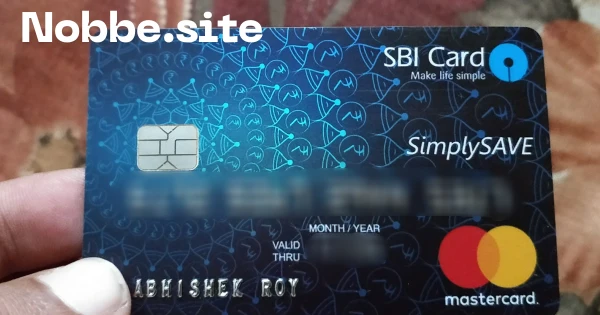
    Stepping into the world of credit in India can be overwhelming, but the SBI SimplySAVE is frequently cited as a top “entry-level” contender. If your daily life involves frequent trips to the supermarket, weekend movies, or dining out with friends, this card is designed to turn those routine expenses into a financial foundation. While it lacks the glitz of premium travel cards, its simplicity is its greatest strength for a beginner. It focuses on high-frequency, “offline” spending, making it a practical tool for someone who wants to earn rewards without changing their lifestyle.


    What is the SBI SimplySAVE and Why It Matters

    The SBI SimplySAVE is a rewards-centric credit card tailored for “lifestyle” and “essential” spending. In the hierarchy of credit cards, this is a starter card, meaning it has accessible eligibility criteria and a low annual fee.

    Why it matters for a beginner is simple: it bridges the gap between basic banking and advanced credit management. By rewarding categories like groceries and department stores, it ensures you are earning points on things you must buy anyway. Furthermore, as an SBI product, it provides a foot in the door with one of India’s largest financial institutions, which can be beneficial when you later apply for car loans or mortgages. It’s a low-risk, high-utility way to start your credit journey.


    Step-by-Step Guide: How to Maximize the SimplySAVE

    To get the most out of this card from day one, follow this tactical approach:

    • Hit the Welcome Milestone: Spend ₹2,000 within the first 60 days. This triggers a bonus of 2,000 reward points (worth ₹500), effectively wiping out your joining fee.

    • Target the “10X” Categories: Use this card specifically for Dining, Movies, Groceries, and Departmental Stores. You earn 10 points per ₹150 here, compared to just 1 point on other spends.

    • Use the Fuel Waiver: Use the card at petrol pumps for transactions between ₹500 and ₹3,000. You’ll get a 1% surcharge waiver, saving you up to ₹100 per month.

    • Track Your Annual Spend: Keep an eye on your total yearly spending. If you cross ₹1,00,000, the renewal fee of ₹499 for the next year is completely waived.

    • Redeem Wisely: You can use points to pay your outstanding credit card bill (Cash and Points) or redeem them for gift vouchers in the SBI Rewards catalogue.
    • Leverage Contactless: For small daily purchases, use the “Tap & Pay” feature. It’s faster and more secure as the card never leaves your hand.

    The Math Behind the Rewards: The “Value Back” Formula

    Understanding the value of your points is key to knowing if a card is “profitable” for you. SBI SimplySAVE uses a specific redemption math:

    $$\text{Value per Point} = ₹0.25 \quad (4 \text{ Points} = ₹1)$$

    To calculate your “Value Back” percentage on the 10X categories:

    • You spend ₹150 and get 10 points.
    • 10 points $\times$ ₹0.25 = ₹2.50.
    • Value Back % = $(2.50 / 150) \times 100 \approx \mathbf{1.67\%}$

    While a 1.67% return might seem small, it is significantly higher than most basic debit cards and applies to your most frequent monthly expenses.


    Real-Life Scenarios: SimplySAVE in Action

    Scenario A: The Grocery Guru

    Priya spends ₹8,000 a month on groceries and departmental shopping. By using her SimplySAVE card, she earns 533 points per month (approx. ₹133 value). Over a year, this totals over 6,400 points, worth ₹1,600. This covers her annual fee three times over, just by buying food.

    Scenario B: The Movie Buff

    Rahul goes to the movies twice a month and eats out frequently, spending about ₹3,000 in these categories. He earns 200 points per month. By the end of the year, he has earned enough points to redeem for a ₹500 Amazon voucher, essentially getting a “free gift” for his hobby.


    FAQs

    1. Is there an income requirement for this card?

    While SBI doesn’t always strictly publish a fixed number, a monthly salary of ₹20,000–₹25,000 or an ITR of ₹3 Lakhs+ is generally considered the baseline for approval.

    2. Does this card offer airport lounge access?

    No. The SimplySAVE is a rewards card for daily life, not a travel card. If you need lounge access, you might look at the SBI Card PRIME or a different bank’s travel-focused card.

    3. What is the difference between SimplySAVE and SimplyCLICK?

    SimplySAVE is better for offline/physical shopping (groceries, stores). SimplyCLICK is better for online shopping (Amazon, Flipkart, Cleartrip). Choose based on where you spend more.

    Conclusion & CTA

    The SBI SimplySAVE is an excellent first card for anyone who wants a straightforward, rewarding experience without high fees. It rewards the “real world” shopping you do every day, and the fee waiver at ₹1 Lakh is one of the most achievable in the industry.


  • 5 Best Credit Cards for Zero Credit History

    5 Best Credit Cards for Zero Credit History

    Navigating the world of finance without a credit history can feel like being locked out of a house you’re supposed to live in. Whether you’re a recent graduate, a new resident, or someone who has simply preferred cash until now, having “zero credit” is a unique challenge. Lenders see you as a blank slate—and in the banking world, no news isn’t always good news. Without a track record, banks have no way to predict if you’ll pay them back.

    However, specialized “Credit Builder” cards are the key to unlocking that door. These tools are specifically engineered for beginners, offering a bridge from having no history to having an excellent score. By choosing one of the top-rated cards for 2026, you aren’t just getting a way to pay for coffee; you are establishing a professional financial identity. In this guide, we’ll explore the best options available right now to help you go from “unscoreable” to “unstoppable.”


    What is a Credit Builder Card and Why It Matters

    A credit builder card is a financial product designed for individuals with limited or no credit history. Unlike standard rewards cards that require a “Good” or “Excellent” score, these cards prioritize accessibility. They often come with lower initial credit limits (starting as low as £200) and higher interest rates, reflecting the higher risk the bank takes on a new borrower.

    The importance of these cards cannot be overstated. Your credit score is your financial passport. It dictates whether you can rent an apartment, the interest rates on your future mortgage, and even your eligibility for certain high-level jobs. By using a credit builder card responsibly for just 6 to 12 months, you prove to the major credit bureaus—Experian, Equifax, and TransUnion—that you are a reliable borrower. This “seed” grows into a robust credit history that saves you thousands of dollars in interest over your lifetime.


    Top 5 Best Credit Cards for Zero Credit History (2026)

    If you are starting from scratch, these five cards offer the best balance of approval odds and credit-building features:

    1. Capital One Classic Card: A staple for beginners, this card is famous for its “QuickCheck” tool, which tells you if you’ll be accepted before you apply. It offers a manageable starting limit (typically £200–£1,500) and provides regular reviews for limit increases.

    2. Barclaycard Forward: Perfect for those who want an incentive to be responsible. This card offers a “Price Promise”—if you make all your payments on time for the first year, they reduce your interest rate by 3%. Do it again the second year, and it drops another 2%.

    3. Vanquis Credit Builder: Known for having very high approval rates for those with no history. While the APR is higher (typically around 42.9% variable), it is an excellent “stepping stone” card to get your foot in the door.

    4. Tesco Bank Foundation: This is a rare find for a starter card because it actually offers rewards. You can build your credit while earning Tesco Clubcard points on your everyday spending.

    5. Ocean Finance Credit Card: This card provides a simple, no-frills path to building credit. It offers a “soft search” eligibility check, meaning you can see if you’re eligible without any “hard inquiry” appearing on your credit file.


    The Math Behind the Score: The Credit Utilization Formula

    The single most important number to watch when building credit is your Credit Utilization Ratio. This is the mathematical relationship between how much credit you have and how much you use.

    The formula is:

    $$\text{Credit Utilization Ratio} = \left( \frac{\text{Current Balance}}{\text{Total Credit Limit}} \right) \times 100$$

    Example: If your new Capital One card has a limit of £500 and you spend £100 on groceries, your utilization is 20%.

    Lenders generally look for a ratio below 30%. If you exceed this, even if you pay it off in full, it can temporarily lower your score because it looks like you are over-relying on borrowed money. For the fastest credit growth, aim to keep your balance below 10% of your limit.


    Real-Life Scenarios: From Zero to Hero

    Scenario 1: The “Subscription” Strategy

    Jordan gets the Barclaycard Forward with a £250 limit. Jordan only uses the card to pay for a £10 monthly gym membership and sets up a Direct Debit to pay the full balance every month. Because the utilization is only 4% and every payment is on time, Jordan’s credit score jumps into the “Fair” category within just four months.

    Scenario 2: Moving Up the Ladder

    Maya starts with a Vanquis card. She uses it for small, weekly grocery runs (about £40). After six months of perfect on-time payments, Vanquis automatically offers her a credit limit increase to £1,000. This higher limit automatically lowers her utilization ratio further, causing her score to climb even faster.


    FAQs

    1. Can I get a credit card if I’ve never had one before?

    Yes. “Credit Builder” and “Student” cards are designed specifically for people in your situation. While you might not get a high-limit travel card immediately, these starter cards are the proven way to get started.

    2. How long does it take to build a good credit score?

    Typically, it takes about 6 months of consistent, on-time activity for a credit score to be generated and show significant improvement. Within 12 to 18 months of responsible use, you can often graduate to “Prime” credit cards with better rewards.

    3. Will I be charged interest if I pay in full every month?

    No. If you pay your “Statement Balance” in full by the due date every single month, you will never pay a penny in interest, regardless of how high the APR is.


    Conclusion

    Building credit from zero is a marathon, but the first step is the most important. By selecting a card like the Capital One Classic or Barclaycard Forward, you are taking control of your financial reputation.

  • How to Get a Credit Card as a Student and Build Your Future

    How to Get a Credit Card as a Student and Build Your Future

    Starting your financial journey can feel like trying to solve a puzzle with missing pieces, especially when you’re balancing classes and a social life. You’ve likely heard that you need credit to do anything—rent an apartment, buy a car, or even get a good phone plan—but how do you get credit when you’re starting from zero? This is where the student credit card comes in.

    It’s a specialized financial tool designed specifically for young adults who are just learning the ropes of money management. By choosing the right card now, you aren’t just getting a piece of plastic for emergencies; you’re building a “financial resume” that will serve you for decades. In this guide, we’ll break down exactly how to navigate the application process, what banks are looking for, and how to use your first card to skyrocket your credit score while avoiding the common pitfalls that trap many first-time borrowers.

    What is a Student Credit Card and Why It Matters

    A student credit card is essentially a “starter” version of a traditional credit card. It functions the same way—allowing you to borrow money up to a certain limit and pay it back—but it usually comes with lower entry requirements and lower credit limits. Because banks know students often have limited income and no credit history, these cards are more accessible than “Gold” or “Platinum” tiers.

    Why does this matter so much? Credit history is a marathon, not a sprint. The length of your credit history accounts for 15% of your total credit score. By opening a card at 18 or 19, you are establishing a long-term track record of responsibility. Furthermore, student cards often come with unique “student-only” perks, such as statement credits for maintaining a high GPA or cash back on common student expenses like dining out, streaming services, and gas. It is the most effective way to transition from financial dependence to independence without needing a massive salary.

    Step-by-Step Guide: How to Secure Your First Card

    Landing your first approval doesn’t have to be stressful if you follow a logical path. Here is a clear roadmap to getting that card in your wallet:

    • Check Your Eligibility: In most regions, you must be at least 18 years old. If you are under 21, federal laws often require you to prove you have an independent income (like a part-time job or scholarships) or have a co-signer.

    • Gather Your Documents: Before hitting ‘Apply,’ have your Social Security number (or equivalent ID), your monthly housing cost, and your total annual income ready.

    • Research Student-Specific Cards: Don’t apply for a high-end travel card yet. Look for cards labeled “Student” from major issuers. These are designed for your specific demographic.

    • Compare the “Big Three”: Look at the APR (interest rate), Annual Fee (aim for $0), and Rewards. As a student, you should never pay an annual fee for a starter card.

    • Consider a Secured Card: If you get denied for a standard student card, look into a “Secured” credit card. This requires a refundable deposit (e.g., $200) which acts as your credit limit. It is almost guaranteed approval and still builds your credit.

    • Submit the Application: Most applications take less than five minutes online. Avoid “shotgunning” applications; apply for one well-researched card at a time to protect your score.

    • Activate and Set Up Autopay: Once the card arrives, the very first thing you should do is set up automatic payments for the “Full Statement Balance.” This ensures you never pay interest or late fees.

    The Math Behind the Score: The Credit Utilization Formula

    Understanding how a credit card affects your score boils down to a specific mathematical ratio called Credit Utilization. This is the percentage of your total available credit that you are actually using.

    The formula is:

    $$\text{Credit Utilization Ratio} = \left( \frac{\text{Total Credit Used}}{\text{Total Credit Limit}} \right) \times 100$$

    For example, if your student card has a limit of $500 and you spend $250 on textbooks, your utilization is 50%.

    Why this matters: Lenders view a high ratio (over 30%) as a sign of financial stress. To keep your credit score healthy, the “golden rule” is to keep your utilization under 10%–30%. Even if you pay it off every month, the balance reported to the credit bureau is what determines your score. If you have a $500 limit, try to never let your statement close with a balance higher than $150.

    Real-Life Scenarios: Making Your Card Work for You

    Scenario A: The “Credit Builder” Strategy

    Alex gets a student card with a $300 limit. Instead of using it for everything, Alex only puts their $15 monthly Spotify subscription on the card. They set up autopay. Because the utilization is low (5%) and the payment is always on time, Alex’s credit score increases by 50 points in six months without Alex ever carrying debt or paying a cent in interest.

    Scenario B: The Cash Back Maximizer

    Sarah has a part-time job and uses her student card for groceries and gas (things she was already going to buy). Her card offers 2% cash back on these categories. She spends $200 a month and pays it off immediately. By the end of the semester, she has earned $24 in cash back—essentially getting a free lunch just for using her card responsibly instead of a debit card.

    Frequently Asked Questions (FAQs)

    1. Will applying for a credit card hurt my credit score?

    When you apply, the bank does a “Hard Inquiry.” This usually drops your score by about 5 points temporarily. However, as soon as you are approved and start making on-time payments, your score will quickly recover and grow much higher than it was before.

    2. What if I don’t have a steady job?

    If you are over 21, you can often include “accessible income,” which may include household income from a spouse or partner. If you are under 21, you typically need your own income or a co-signer (usually a parent) who agrees to be responsible for the debt if you can’t pay.

    3. What is the difference between a debit card and a credit card?

    A debit card takes money directly from your bank account—it does not help your credit score. A credit card is a loan that you pay back later, and your behavior is reported to credit bureaus to build your financial reputation.

    Conclusion: Take the First Step Today

    Getting a credit card as a student is one of the smartest moves you can make for your future “adult” self. It’s not about spending money you don’t have; it’s about proving to the financial world that you are reliable and disciplined. By following the steps above—starting with a $0 annual fee student card and keeping your utilization low—you’ll be well on your way to a top-tier credit score before you even graduate.

  • Top 7 Best First Credit Cards in India 2026

    Top 7 Best First Credit Cards in India 2026

    Stepping into the world of credit can feel like navigating a maze, especially with the sheer number of options available in 2026. Choosing the Best First Credit Card in India 2026 is about more than just rewards; it’s about finding a reliable partner to help you build a stellar credit score while earning back on your daily spends. Whether you are a first-time earner or a student, the right starter card sets the foundation for your financial future.


    What is a Starter Credit Card and Why it Matters

    A beginner or “starter” credit card is a financial tool specifically designed for individuals with little to no credit history. In the Indian market of 2026, these cards are more accessible than premium variants, often featuring lower income requirements or being “secured” against a fixed deposit (FD).


    The importance of your first credit card cannot be overstated for two primary reasons. First, it establishes your CIBIL score. A healthy score is the “green signal” banks look for when you later apply for home loans or car loans. Second, it introduces you to financial discipline. By using a card with a modest limit, you learn to manage credit cycles, understand interest-free periods, and reap the benefits of digital payments—such as cashback and fuel waivers—that cash simply doesn’t offer.


    Step-by-Step Guide: How to Choose and Use Your First Card

    Finding the right card doesn’t have to be complicated. Follow this simple roadmap to ensure you pick a winner:

    • Check Your Eligibility: Most entry-level cards require a minimum age of 18 or 21 and a monthly income starting around ₹15,000 to ₹25,000.


    • Identify Your Spend Category: If you shop mostly on Amazon, pick a card like the Amazon Pay ICICI. If you travel by road often, look for a fuel-centric card like the IndianOil Axis Bank Card.


    • Opt for “Lifetime Free” (LTF): For your first card, try to find one with no joining or annual fees. This allows you to keep the account open forever (increasing your credit age) without any cost.

    • Apply via the Bank App: In 2026, most banks offer “instant” digital onboarding. Use your Aadhaar and PAN for a Paperless KYC process.

    • Set a Repayment Reminder: Always pay the Total Amount Due, not just the “Minimum Amount.” This is the golden rule to avoid debt traps.

    • Keep Utilization Low: Try not to use more than 30% of your total credit limit. If your limit is ₹50,000, try to keep your monthly spends under ₹15,000 to boost your credit score faster.


    The Math Behind Credit: How Interest is Calculated

    Many beginners find the interest rates on credit cards (often 36-42% annually) intimidating. However, you only pay interest if you carry a balance forward. The formula used by banks to calculate Interest (Finance Charges) on a revolving balance is:

    $$\text{Interest} = \frac{(\text{Outstanding Amount} \times \text{Number of Days} \times \text{Interest Rate per Month} \times 12)}{365}$$

    For example, if you miss a payment of ₹10,000 and the monthly interest is 3.5%, the bank doesn’t just charge you at the end of the month—they calculate it daily from the date of the transaction. This is why paying in full during the interest-free period (usually 45-50 days) is the smartest move.


    Real-Life Scenarios: Making the Most of Your Card

    Scenario 1: The Online Shopper

    Rahul is a software intern who shops frequently on Flipkart. He gets the Flipkart Axis Bank Credit Card. In one month, he spends ₹20,000 on electronics and ₹5,000 on Swiggy. With 5% and 4% cashback respectively, he earns ₹1,200 back in his statement—essentially getting a free dinner just for using his card.

    Scenario 2: The Commuter

    Priya spends ₹4,000 every month on fuel for her scooter. By using the SBI BPCL Card, she gets a 4.25% value-back in the form of reward points and saves on the 1% fuel surcharge. Over a year, she saves over ₹2,000, which covers the card’s annual fee multiple times over.


    Top Starter Cards for 2026

    Card Name Best For Annual Fee
    Amazon Pay ICICI Amazon Shoppers Lifetime Free
    SBI Cashback Card General Online Spends (5%) ₹999 (Waived on spends)
    HSBC Visa Platinum Beginners & Dining Lifetime Free
    IDFC FIRST WoW Students (FD-backed) Lifetime Free
    Axis ACE Utility Bills (Google Pay) ₹499

    FAQs: Common Beginner Questions

    1. Can I get a credit card without a job?

    Yes. You can apply for a Secured Credit Card like the IDFC FIRST WoW or OneCard. These are issued against a Fixed Deposit (FD), meaning your credit limit is usually 90% of your FD amount. No income proof is required.


    2. Will my credit score drop if I get a card?

    Initially, your score might dip by a few points due to a “hard inquiry” by the bank. However, as you make timely payments over 3-6 months, your score will rise significantly higher than where it started.

    3. What is the ‘Interest-Free Period’?

    It is the window between your purchase and your bill due date. If you buy something on the 1st of the month and your bill is due on the 20th of the next month, you’ve had 50 days of interest-free credit.

    Conclusion 

    Choosing the Best First Credit Card in India 2026 is your first major step toward financial maturity. By picking a card that aligns with your lifestyle—be it for cashback, travel, or fuel—you turn your regular expenses into savings. Remember, a credit card is a powerful servant but a dangerous master; use it wisely, pay in full, and watch your financial profile grow.